
Buying off-plan in the Dominican Republic can be one of the smartest ways to enter the market. You lock in a lower price, you pay in installments while the building goes up, and by the time you get the keys the unit is often worth more than you paid. That’s the upside.
The risk is just as real: you’re handing over deposits for something that doesn’t physically exist yet. If the project stalls, runs out of money, or the developer disappears, where does your money go?
That’s the exact problem a fideicomiso is built to solve. If you’re going to remember one thing from this post, make it this: in a well-structured preconstruction deal, your money should never go straight into the developer’s bank account.
What a fideicomiso actually is
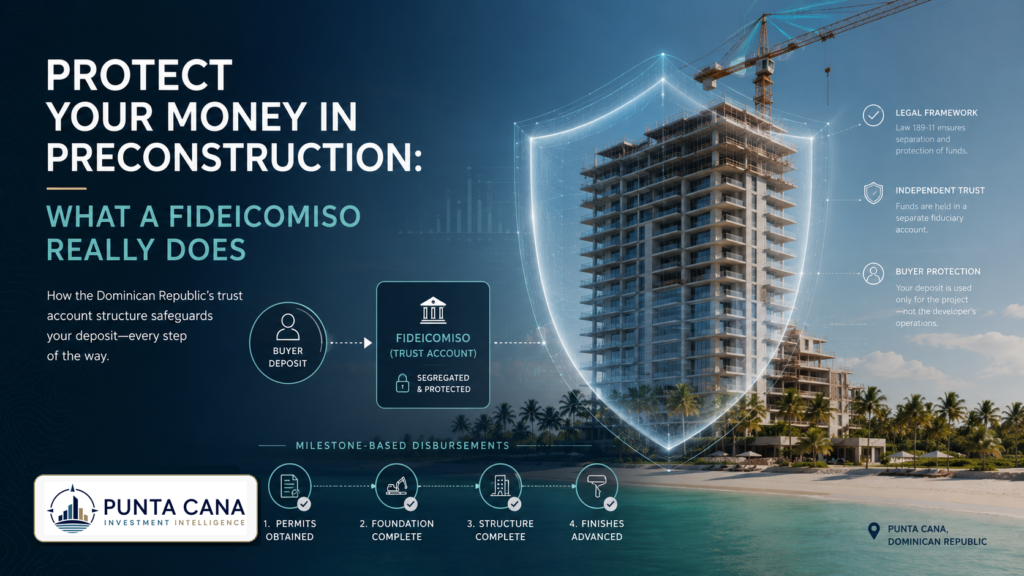
A fideicomiso is a trust. In a real estate project it usually works like this:
A regulated trust company (the fiduciaria) creates a separate legal estate — its own “ring-fenced” pool of assets — that holds the project’s land, permits, and buyer deposits. Your payments go into the trust, not to the developer personally. The developer can only draw funds from the trust as the project hits agreed construction milestones, verified by a third party.
In the Dominican Republic these structures are governed by Law No. 189-11, which created the modern legal framework for trusts. The key feature is patrimonio autónomo — the trust’s assets are legally separated from the developer’s other business. If the developer runs into trouble elsewhere, or even goes bankrupt, the money and assets inside the trust are not theirs to seize.
Think of it as an escrow account with a referee. The referee’s whole job is to make sure money only moves when the work moves.
Why preconstruction without one is a gamble
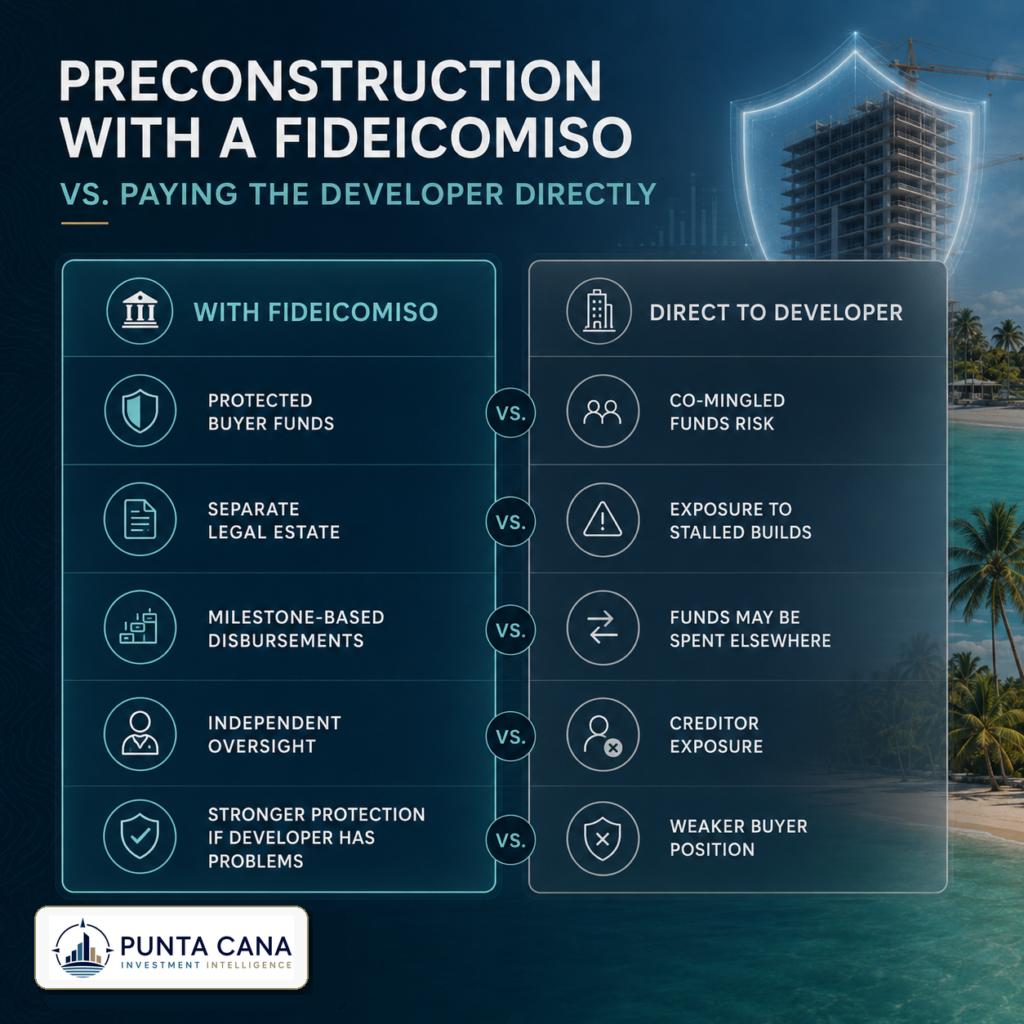
When you pay a developer directly for an off-plan unit, your protection is only as strong as that developer’s honesty and cash flow. A few things can go wrong:
- Co-mingled funds. Your deposit gets mixed with the company’s operating money and spent on overhead, marketing, or an entirely different project.
- A stalled build. The developer runs short on capital, construction freezes, and you’re left holding a contract for a building that may never finish.
- Creditor claims. If the developer’s company is sued or fails, buyers who paid directly can end up standing in line behind the bank and other creditors.
With a properly funded trust, the money is insulated from all of this. It can only be used for the project it was collected for, and only as the project genuinely progresses.
How a trust protects you, step by step
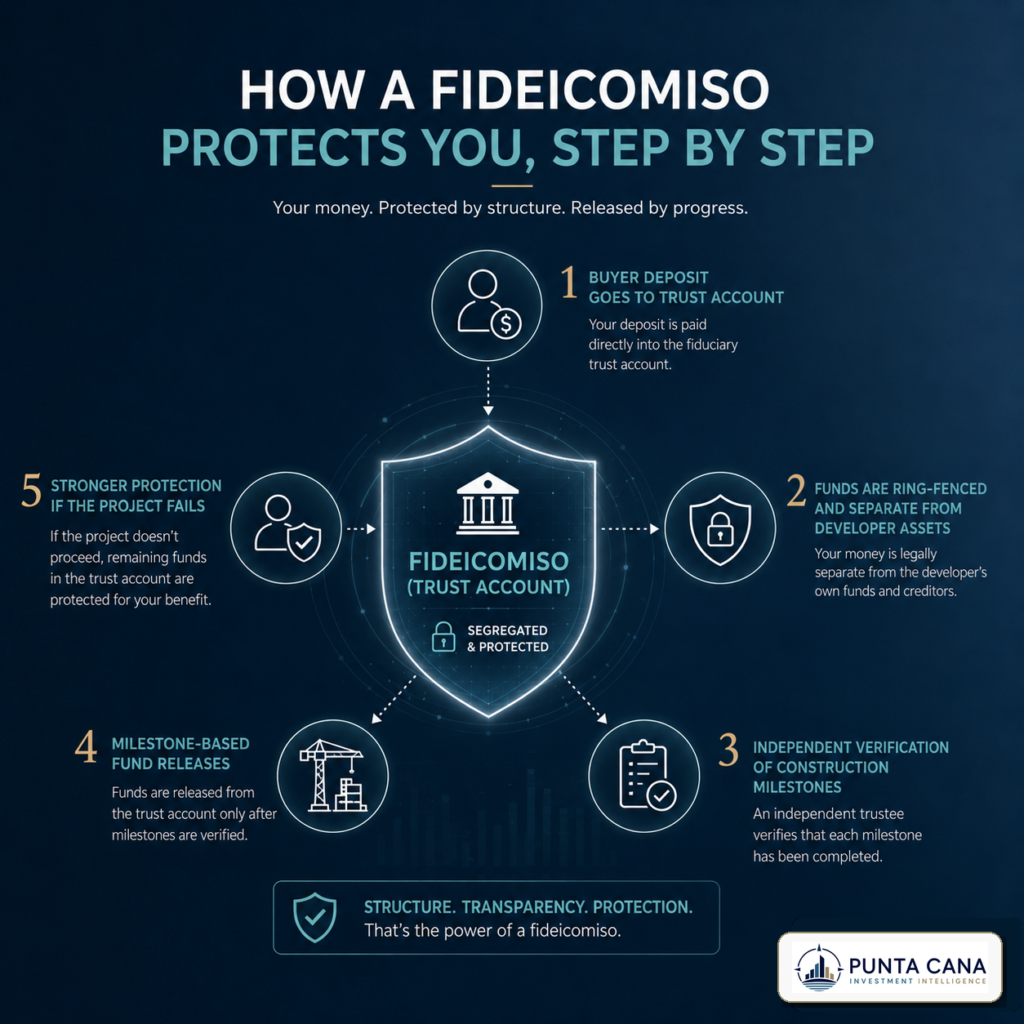
- Your deposit lands in the trust, not the developer’s account. The paper trail leads to the fiduciaria.
- Funds are released in tranches tied to construction milestones — foundation poured, structure topped out, finishes installed — rather than all at once.
- An independent supervisor verifies the work before each release, so money follows progress instead of promises.
- The assets are legally separated from the developer’s other liabilities, shielding buyers if the company hits problems.
- If the project fails, the trust’s rules govern what happens to the remaining funds — which is a far better position than being an unsecured creditor.
None of this guarantees a project will succeed. What it does is make sure your money is tracked, protected, and tied to actual construction.
How to confirm one is actually in place
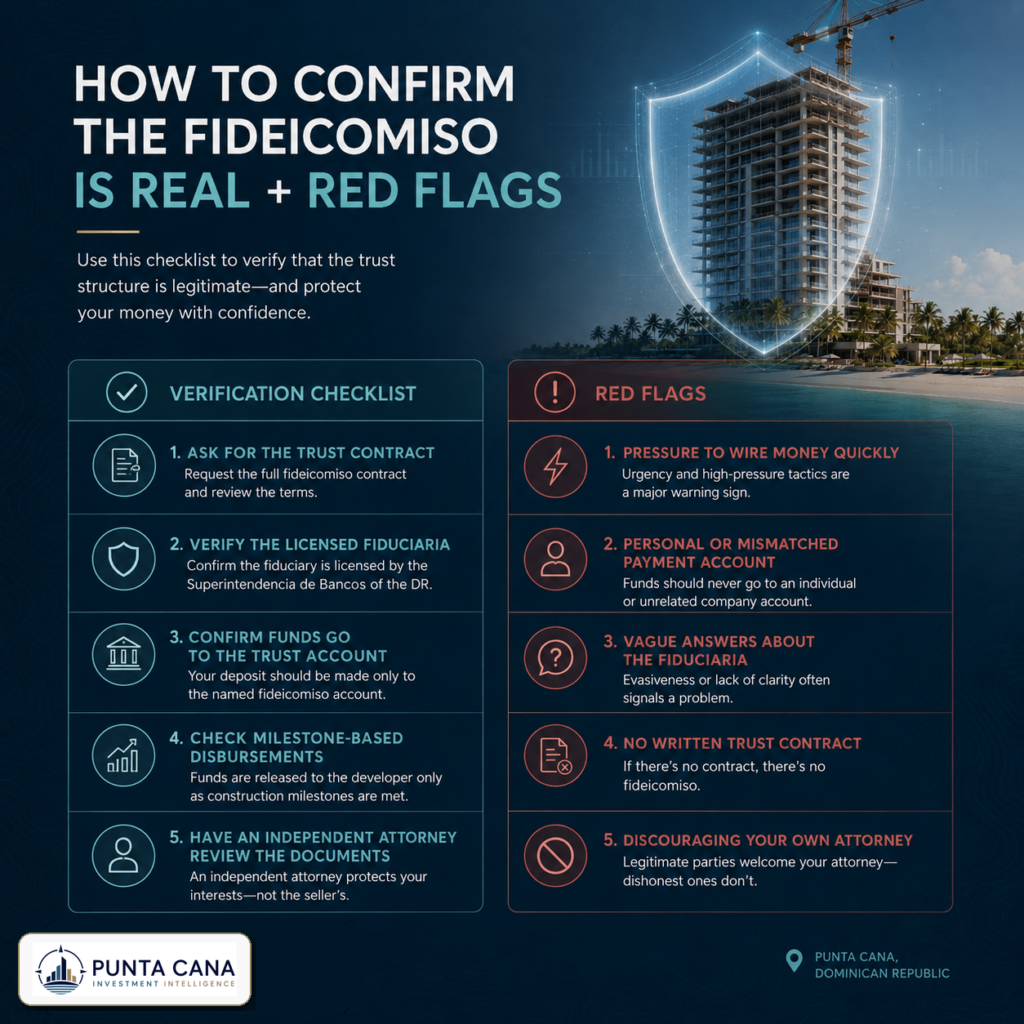
This is where buyers get caught. A developer can say “the project is held in a fideicomiso” in a brochure and still take your wire into a regular company account. Saying it and doing it are not the same thing. Before you send a single dollar, confirm the structure is real:
- Ask for the trust contract (contrato de fideicomiso) and the name of the licensed fiduciaria administering it. A legitimate one will have no problem providing it.
- Verify the fiduciaria is a regulated entity, not a shell or an affiliate the developer quietly controls.
- Read where your payments are directed. The purchase agreement and wiring instructions should send funds to the trust account — not to the developer’s personal or operating account.
- Check that disbursements are milestone-based and that an independent party signs off on construction progress.
- Have an independent attorney review it. Your own lawyer, not the one the developer recommends, should confirm the trust exists, is funded, and names you as a beneficiary of your contributions.
If the project is also registered under CONFOTUR (the Dominican tourism-development incentive regime), that’s a separate but encouraging signal: it means the project has cleared a layer of government review to qualify for tax benefits. CONFOTUR registration and a real fideicomiso aren’t the same protection, but together they point to a developer operating in the open.
Red flags that should stop you cold
- Pressure to wire money fast to “hold the price,” before you’ve seen the trust paperwork.
- Payment instructions pointing to a personal account or a name that doesn’t match the registered project.
- Vague answers about who the fiduciaria is, or no written trust contract available.
- A developer who discourages you from using your own independent attorney.
Any one of these is a reason to slow down. All a serious developer has to do is show you the documents.
The bottom line
Preconstruction is a genuinely good strategy — but the discipline that makes it safe is boring paperwork, not optimism. The single most important question you can ask before buying off-plan is simple: “Is my money going into a fideicomiso, and can I see proof?”
Confirm that, and you’ve removed the biggest risk in the entire transaction.
This article is for general educational purposes and is not legal or financial advice. Trust structures, contracts, and regulations vary by project — always have a qualified Dominican attorney review the specific documents before you commit funds.